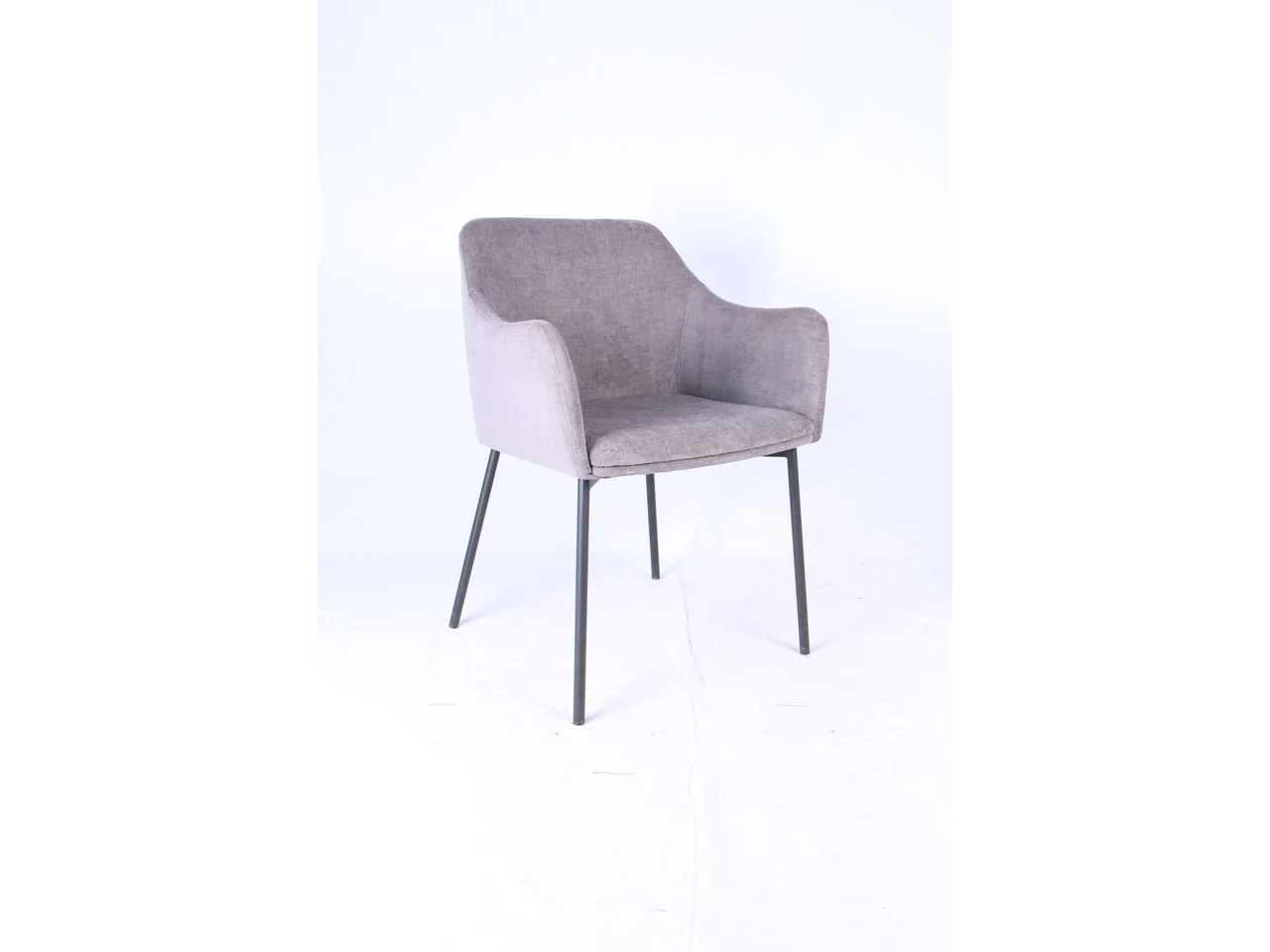
People assume a dining chair is comfortable because of the cushion. Most of the time it is comfortable, or it is not, because of three measurements that have nothing to do with foam. I have watched buyers fall in love with a chair in a showroom, order it, and then field complaints — and the chair was fine. It just did not fit the table. So before we talk fabric, we talk centimetres.
Seat height: the 45 against the 75
A standard dining table sits around 75 cm from the floor. The seat height that pairs with it is about 45 cm. That single relationship — 45 under 75 — is what lets a person's forearms rest on the table while their feet stay flat on the floor. Push the seat to 48 or 50 because the design looked better and you crowd the thigh under the apron; drop it to 42 and the person eats with their shoulders up by their ears. We hold dining-chair seat height tightly for exactly this reason, and if your table is non-standard we adjust the chair to it rather than shipping a chair that fights the table.
This is also where café and contract orders go wrong. A bar-height counter at 90 cm needs a different seat entirely, and mixing a standard dining chair with a tall table is a complaint waiting to happen. Tell us the table height before we build, not after.
Markets differ here, and it is worth saying out loud. The 45 cm figure suits the average build in most Western markets, but if you sell into a region with a taller or shorter average user, a centimetre or two either way makes the set feel right rather than borrowed. We will hold the standard unless you tell us otherwise; if you know your buyers, tell us and we tune the seat to them at no extra tooling, because seat height on a four-leg frame is a cut length, not a new mould.
Clearance and depth: the numbers under the table
The gap between the top of the seat and the underside of the tabletop should be roughly 25–30 cm. Less than that and tall users cannot cross their legs or even slide their thighs in cleanly; that is the "awkward, knees-jammed" feeling people describe without knowing the cause. It also matters for chairs with arms — an armrest that does not tuck under the apron turns a comfortable chair into one that sits half a metre back from the table. Seat depth is the other quiet one. The seat should let someone sit fully back against the support while still leaving about 5–8 cm behind the knee, so the front edge does not dig into the leg. These are small numbers, and they are the whole difference between a chair you can sit in for a ten-minute coffee and one you can sit in for a two-hour dinner.
Firmness is a duty decision, not a luxury one
Buyers ask for "soft and comfortable," and for a guest chair that is right. For an everyday chair it is a trap. A soft, deep cushion feels great in the showroom and goes flat by month six because it gets sat in three times a day. An everyday seat wants a firmer foam that holds its shape — slightly less plush on day one, far more comfortable in year two. The cushion that wins the sale is often the one that loses the reorder.
The trade-off, stated plainly
Here is where everyday seating and occasional seating split. A chair for a café or a dining set that gets used three times a day needs all three numbers right and needs a seat firm enough to hold its shape. A chair that gets used twice a week for guests can carry a softer, plusher seat because it is not earning its living. We will build you either, but we will not sell you the plush guest-chair seat for a hard-use everyday line and let you discover the difference after the container lands.
One practical tip for buyers ordering by photo: a chair can hit every number on the spec sheet and still feel wrong if the back angle is off. A dining back wants a slight recline — a few degrees past vertical — so the sitter can lean without the chair feeling like a school bench. We set that angle on the sample and ask you to sit in it, because it is the one comfort factor a drawing never shows and a five-minute showroom test always does. Approve the sample by sitting, not by looking.
If your dining set has to live with a specific table or a specific market's average height, send us the table dimensions and we will set the chair to them. Start through the contact form, browse the dining-chair range or the wider product line, read how we build to order on the OEM/ODM page, or email [email protected].