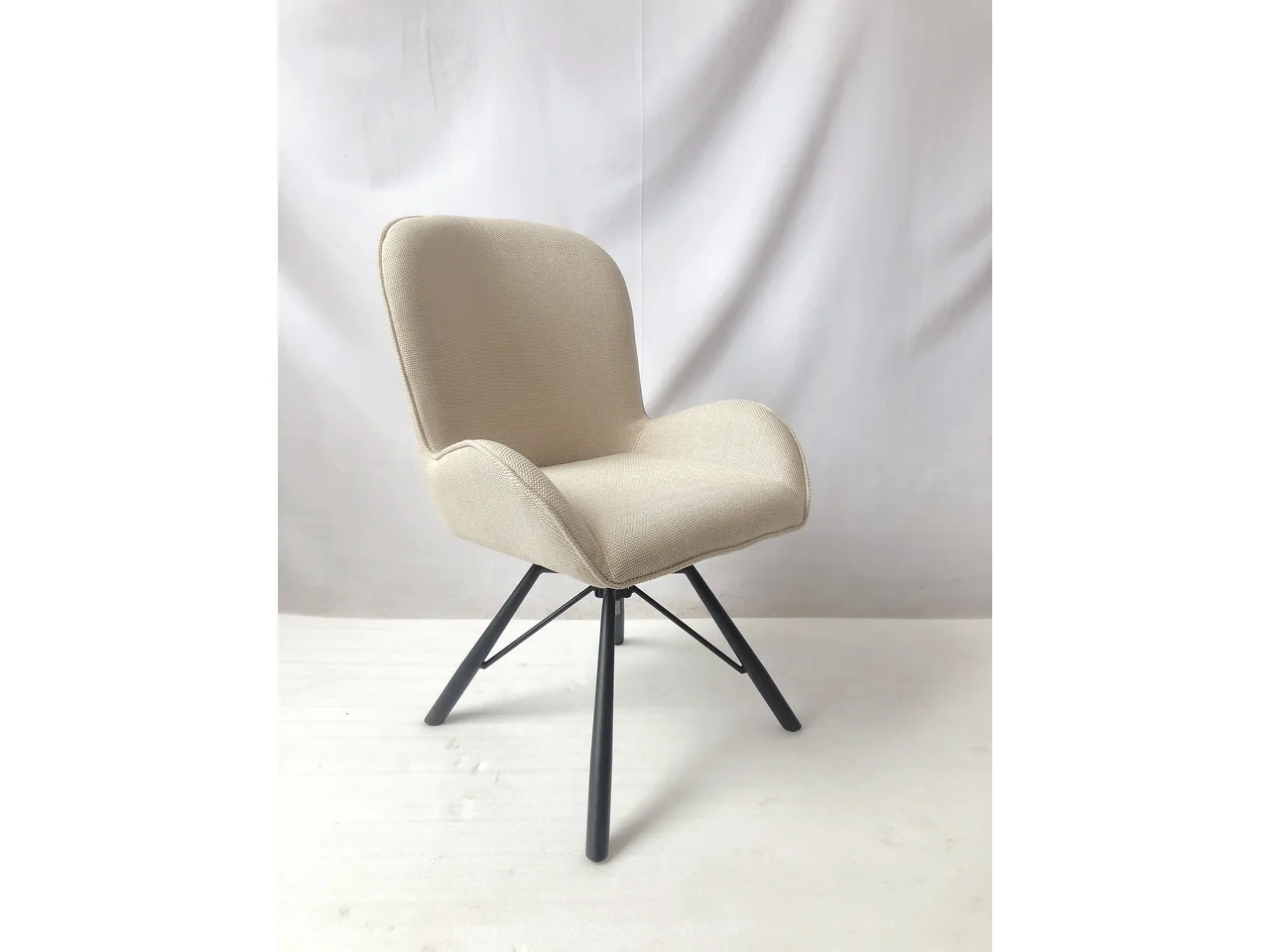
Almost every enquiry mixes up OEM and ODM, and that is fine until the moment it costs money. The difference decides how much you pay before a single chair is made, how long your first sample takes, and who owns the design at the end. For a smaller importer those three things matter more than the unit price, so it is worth getting the words straight before you ask for a quote.
What the two words actually mean
OEM means you bring the design and we build to it. Your drawings, your dimensions, your tooling. You own the result, and no one else can buy that exact chair from us. ODM means we already have the design — a chair from our development range — and you take it, brand it, and pick the finishes. The cost gap between those two is not small. Going the ODM route typically cuts the upfront investment by something like 60–70% compared with full OEM, because you are not paying to tool a new mould, a new base or a new mechanism from scratch. A new base mould alone is a real number, and on a first order it can dwarf the unit cost.
The sample stage feels different too. An OEM sample is design-led and runs longer, because we are making a thing that did not exist — there are usually more rounds and more back-and-forth on geometry, and each round costs time and a sample fee. An ODM sample is mostly finish work: your fabric, your colour, your logo on an existing platform, so the rounds are shorter and cheaper. If you have heard people talk about "private label," that is usually ODM with your branding on it.
Which tier fits which buyer
If you are a smaller brand testing a market, ODM is almost always the right first move. You get a proven office chair or dining chair to market fast, with low upfront cost, and you find out whether the product sells before you commit tooling money. If it sells and you want something competitors cannot copy, that is when OEM earns its cost — you spend on tooling to own a design that is yours alone. Plenty of buyers start ODM on one line and move to OEM on the line that proves itself, and that is exactly the order we recommend.
The hybrid most buyers actually want
There is a middle road that does not get talked about enough. You take one of our ODM platforms and we modify it — a different back, your armrest, your stitch pattern, a colour no one else runs. You are not paying for full OEM tooling, but you get a chair that does not look like everyone else's catalogue. For a value brand that wants to stand out without funding a new mould, this is usually the sweet spot, and it is most of what we quote. The ODM vs OEM guide on ChairManufacturer.net covers how buyers across the industry use these two routes differently depending on order size and brand stage.
One thing to settle early on any tier is the minimum order. OEM and the heavier ODM modifications carry a higher MOQ, because tooling and setup have to be spread across enough units to make sense; a pure ODM order off an existing platform can run at a lower minimum. If your first order is small, start on a stock platform and prove the market before you ask for changes that push the MOQ up. We would rather you place a sensible first order and reorder than overcommit on a guess. The samples and the timeline both get quoted up front, so there are no surprises between the deposit and the shipment.
The trade-off, stated plainly
There is also a quality point that gets lost in the OEM-versus-ODM debate. An ODM platform has usually been built and shipped before, which means the obvious problems have already been found and fixed in earlier runs. A fresh OEM design has not — your first production run is also the first time that exact chair has existed at volume, so we plan a tighter first-article inspection and a slower ramp. That is not a reason to avoid OEM; it is a reason to budget the time for it. A buyer who rushes a brand-new design into a full container without a proper first-article check is the buyer who gets surprised.
The honest version: OEM buys you exclusivity and control and charges you for both, upfront and in time. ODM buys you speed and a low entry cost and asks you to accept a platform other buyers can also license. Neither is "better" — they fit different stages. Where we draw a line is the buyer who wants OEM exclusivity at ODM prices; that math does not exist, and a supplier who pretends it does is hiding the tooling cost somewhere you will find later.
We build both routes to ANSI/BIFMA X5.1 and EN 1335 test methods, and testing can be arranged per order at the sample stage. If you are not sure which tier fits your budget, tell us your design status and your quantity through the contact form, read how we run it on the OEM/ODM page, see what platforms we already have on the products page, or email [email protected].