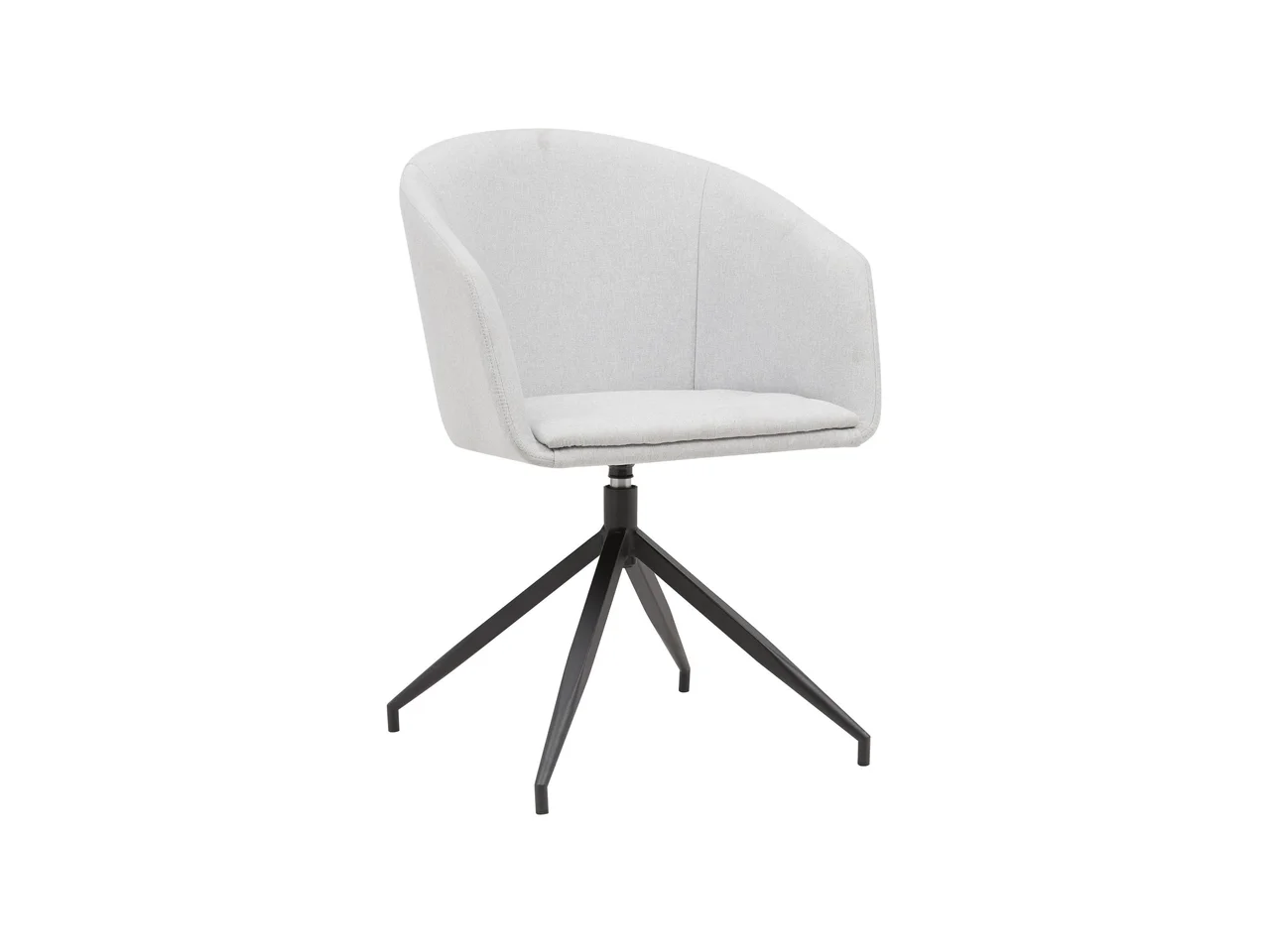
A few years ago almost every task chair we shipped went into an office building. Now a large share goes into a spare bedroom or a kitchen corner. The remote-and-hybrid shift did not slow down the way some predicted — the home-office furniture market is still forecast to grow at around a 7.6% annual rate over the next decade. For a factory like ours that is a real change, because the home buyer is not the same buyer as the facilities manager, and the chair should not be the same chair.
The SOHO chair has a different brief
A corporate task chair is bought once for a desk that gets used eight hours a day by whoever sits there. A home-office task chair gets four to six hours of use, often by one known person, in a room where floor space and visual bulk matter as much as ergonomics. That changes the spec in your favour. The duty cycle is lighter, so the mechanism can be simpler. The footprint should be smaller, so a compact base reads as a feature, not a compromise. And the look has to suit a home, not a cubicle — which is why mesh backs and softer colours sell better here than the big black executive shape.
None of that means weak. We still size the five-star base to the user — a proper task-chair base is rated to 120 kg and up — and we still want a real cylinder in the column. The savings come from removing the parts a home user never engages: the four-way adjustable arms, the heavy synchro mechanism, the deep contract foam. Take those out and you have a lighter, cheaper, perfectly honest chair. The home buyer wants something that looks tidy in a video call and does not sink by month four; give them that and the reviews take care of themselves.
Assembly matters more in this channel than in any other. A corporate chair is built by a facilities crew; a home chair is built by the customer on a living-room floor with a printed sheet. If the base clicks into the cylinder by hand and the back bolts on with one tool, you avoid the most common one-star review there is — "missing a part" or "could not put it together." We design the home line so the whole job is four or five steps and one Allen key, and we double-check the part bag at packing, because a fifty-cent bolt missing from the bag costs you the whole sale.
Why the smaller chair ships cheaper
A compact home chair is not just cheaper to build, it is cheaper to land. A smaller back and a knock-down base mean more units per carton and more cartons per container, and on a value product the freight per chair is a number you feel directly in your margin. We design the SOHO line to nest or flat-pack on purpose, because that single decision often saves more per unit than any single component swap. A chair the customer assembles in five minutes with one Allen key ships at a fraction of the volume of a pre-built one.
One spec call buyers get wrong
The most common mistake I see entering this channel is over-speccing the chair to look "premium" in the listing photos — adding a headrest, a lumbar dial, 4D arms — on a chair priced for value. Every one of those is a moving part and a cost, and on a home chair half of them never get adjusted after day one. They also push the price into a band where the buyer compares you against real ergonomic chairs and you lose. Pick two features that photograph well and matter — usually a breathable mesh back and a smooth-rolling base — and drop the rest.
The trade-off, stated plainly
The temptation, when a category is growing, is to ship the cheapest possible chair and ride the wave. We push back on one thing: do not cut the base and the cylinder to chase a price, because the home user who feels the chair sink or wobble leaves a one-star review, and in this channel reviews are the whole game. Cut the adjustments, not the structure. We build the home line to ANSI/BIFMA X5.1 and EN 1335 test methods, and testing can be arranged per order.
If you sell online, plan the carton for the courier, not just the container. A box that survives an ocean container but gets thrown by a parcel driver still arrives damaged, and a damaged-on-arrival rate of even a few percent eats the margin on a value chair. We add corner protection and test-drop the home-line carton for that reason — it is a small cost that stops a return that was never about the chair.
If you are entering the home-office channel and want a chair specced for that buyer rather than a corporate hand-me-down, tell us your price point and target market through the contact form, see the task-chair range or the wider product line, or write to [email protected]. We can also walk you through how an ODM development for this segment runs.