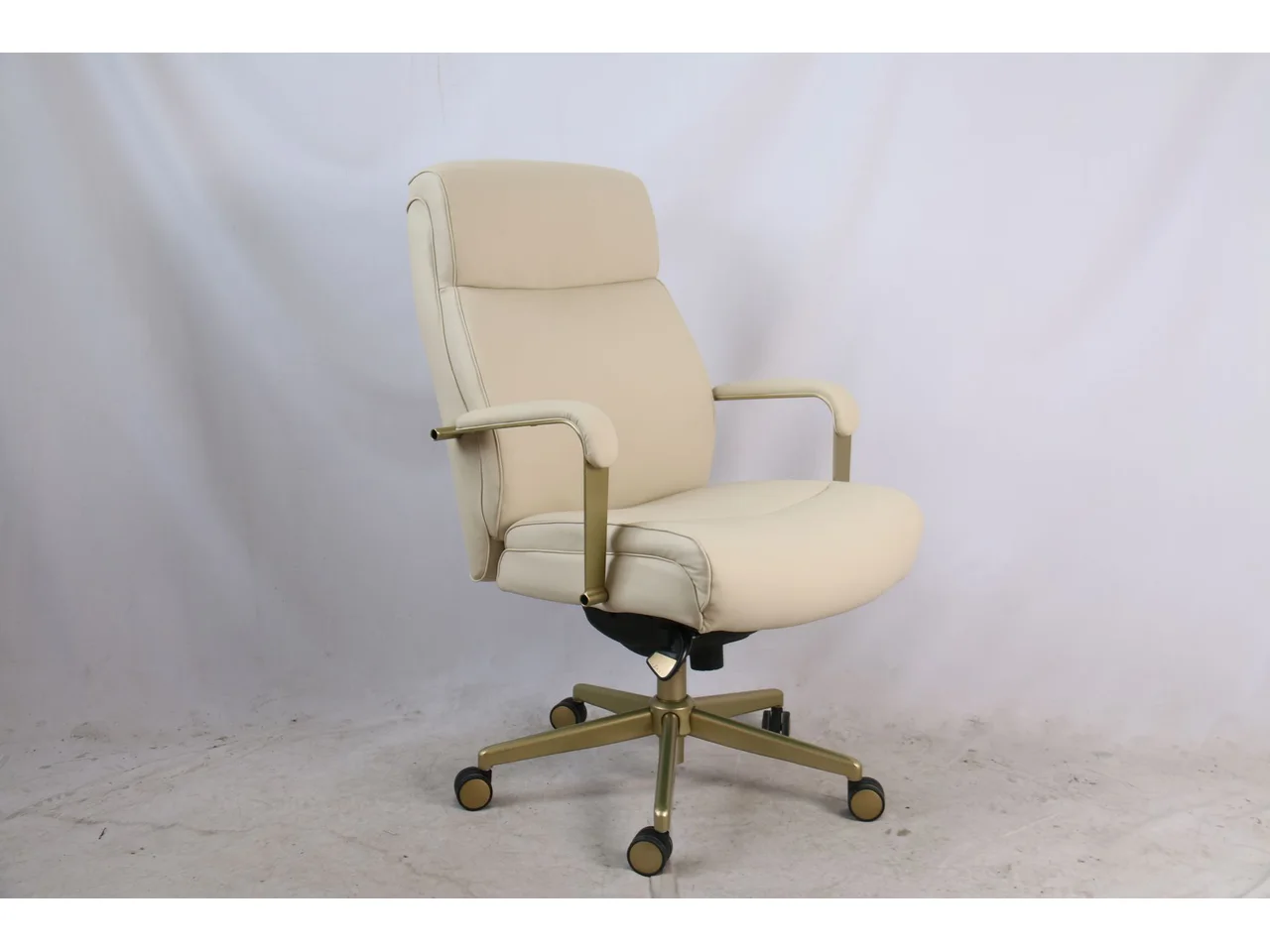
When a buyer tells me a competitor offered "the same chair" for two dollars less, I do not argue about the price. I ask for ten minutes with the bill of materials. A task chair at this tier is roughly nine cost blocks, and once you lay them side by side, the two dollars always has an address. It lives in a specific part, and that part is almost never one you can see in a photo. So here is what an entry-level task chair actually costs to build, block by block, the way we cost it when we quote.
The nine blocks, roughly weighed
Take a typical value task chair — mesh back, fabric seat, simple tilt, nylon base — landing around the $25 FOB mark. The exact cents move with steel and resin prices, but the proportions hold steady enough that I will commit to them in print.
- Gas lift: roughly $2.5–3.5. The single most-swapped part in the industry. A stamped, class-marked cylinder sits at the top of that band; an unmarked one a dollar below it. They look identical installed.
- Mechanism: roughly $2–3. A basic centre-tilt plate. A synchro would double it, which is why you will not find one at this price.
- Base and castors: roughly $2.5–3.5. Reinforced nylon base plus five standard castors. The diameter and the glass-fibre content of the nylon are where this block flexes.
- Seat: roughly $3–4. Plywood or moulded board, foam block, fabric and the cut-and-sew labour. Foam density is the quiet lever inside it.
- Back: roughly $2.5–3.5. Frame, mesh, lumbar bar if any. Mesh grade moves this less than buyers expect — the frame moulding is most of it.
- Armrests: roughly $1–2. Fixed PP arms at the bottom, height-adjustable at the top. The cheapest part to delete entirely.
- Hardware and small parts: under $1. Bolts, washers, the Allen key, the part bag.
- Carton and packing: roughly $1.5–2.5. Double-wall board, internal buffers, print. The block buyers cut first and regret first.
- Labour, factory overhead and margin: the remainder, very roughly $5–7. Assembly, QC, depreciation, electricity, and the part that keeps the factory open.
Add it up and you can see the uncomfortable truth of the value tier: there is no single big number to attack. The chair is cheap because every block is already lean. Which is exactly why a quote two dollars lower deserves suspicion rather than celebration.
Where the two dollars hides
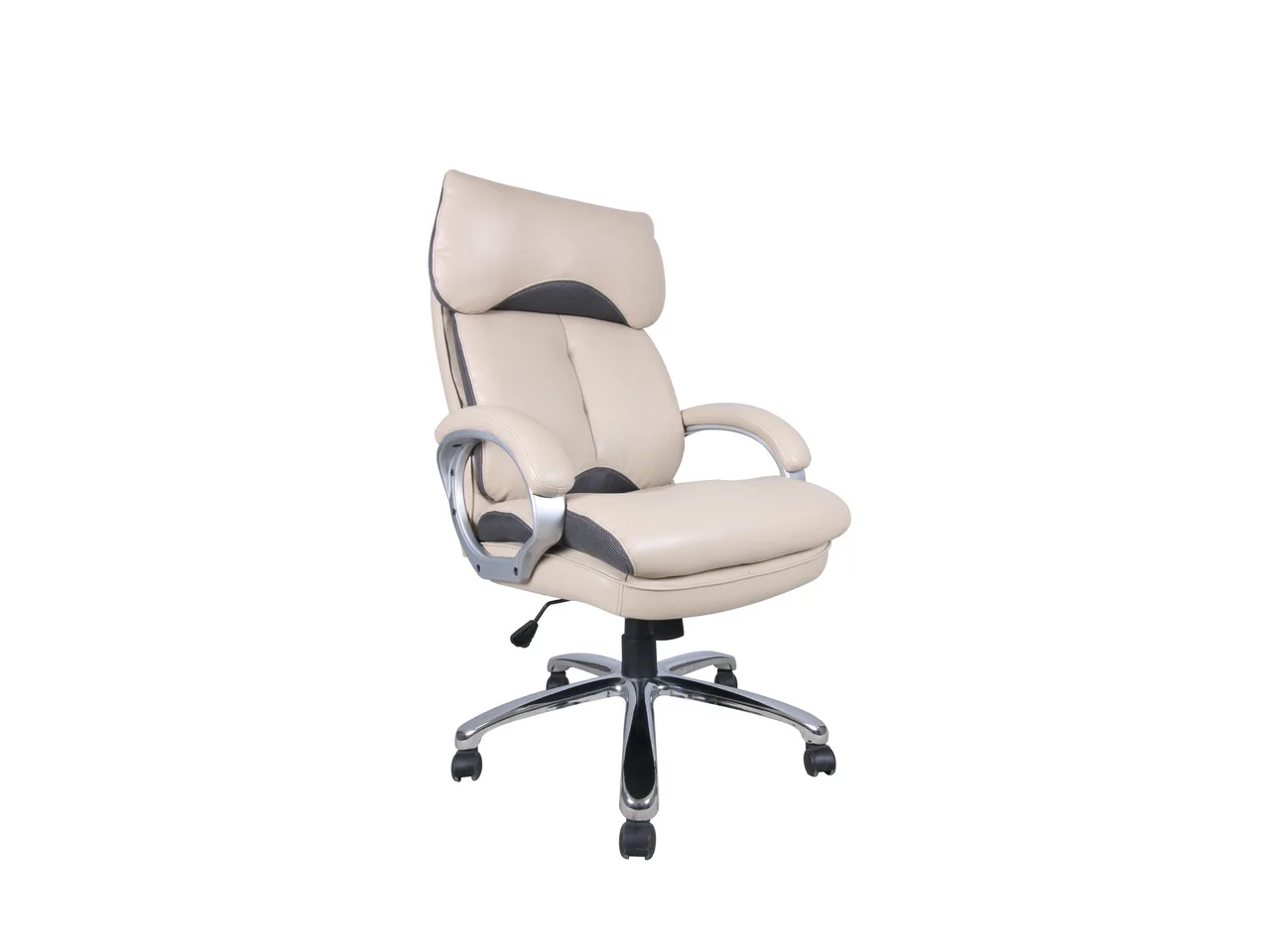
A competitor who is two dollars under is doing one of three things. Sometimes they are genuinely better at one block — a factory that moulds its own bases in-house keeps the moulder's margin, and that is real, honest advantage. Sometimes they are taking the margin block down to win the order, which works exactly once and shows up later as a factory that cannot afford to fix problems. But most often, in my experience, the two dollars comes out of the gas lift, the foam and the carton — in that order — because those are the three parts whose downgrade is invisible at handover and expensive six months later. An unmarked cylinder that sinks, foam that flattens by month four, a single-wall carton that arrives crushed: each is a saving you paid for, with interest, in returns.
This is why we put the spec inside the quote — cylinder class, base diameter, foam density, board grade — and ask buyers to demand the same from anyone they compare us against. A price without a spec is not a price; it is an opening position. I went deeper on which downgrades are safe in our note on what to keep and what to cut; the short version is that the structure and the cylinder are never the right place.
What the BOM teaches you about negotiation
Once you think in blocks, your negotiation gets sharper and fairer at the same time. Asking for a flat dollar off invites the factory to find it in an invisible part. Asking "can we go to fixed arms and save the adjustability" or "can we drop to a 320 mm base since this is a light-duty SKU" is a conversation we can have with the numbers open, and the saving comes out of a block you chose, eyes open, instead of one we chose for you in the dark. The best value-tier buyers I work with negotiate the spec, not the price — the price follows.
It also tells you where paying more is cheap. Moving from an unmarked cylinder to a class-marked one is about a dollar. Moving foam up one density grade is cents. Against a $25 chair those sound like big percentages; against one warranty claim with freight attached, they are nothing.
How we quote it
Every quote we send on the task-chair line or the wider office-chair range carries the block spec in writing, and we will cost the same model at two spec levels side by side if you want to see exactly what each dollar buys. The chairs are built to ANSI/BIFMA X5.1 and EN 1335 test methods, and third-party testing can be arranged per order — at this price tier that sentence matters more, not less, because the parts under the fabric are where the tier cuts corners.
If you have a target landed price, send it with your market through the contact form or to [email protected] and we will come back with the BOM that honestly fits it — and tell you plainly if it does not exist. Our OEM/ODM page explains how the sample stage locks each block before production.